

Monday, 10 October 2016

Leucistic Starling
One of two present since July, still hanging on and showing well in the forestry on Saturday.

Sunday, 9 October 2016
Hawkers at Holme
Just two of the many Migrant and Southern Hawkers at Holme Dunes.


Male Migrant Hawker Aeshna mixta

Male Southern Hawker Aeshna cyanea

Sunday, 2 October 2016

Ivy Colletes on the patch
Ivy Colletes, Colletes hederae, Old Hunstanton, 2nd October 2016


These bees were numerous this afternoon on sheltered, sunlit ivy growing in the lower alleys of Old Hunstanton. I couldn't find any in Holme and have yet to check in Hunstanton.
Wednesday, 28 September 2016
2 new species for the patch and two recent mystery ichneumons.....identities to be confirmed

A Chrysid cuckoo-wasp, Chrysis mediata, Holme NOA, 24th September 2016

An Ichneumon - presumed to be Dusona falcator, Holme NWT, 24th September 2016

An Ichneumon - presumed to be Achaius oratorius, Holme NWT, 24th September 2016


Tuesday, 27 September 2016
Off Patch: northeast Norfolk
Willow Emerald Damselfly, Beeston Common, 26th September 2016


Ivy Colletes, Colletes hederae, Beeston Common, 26th September 2016

Grass of Parnassus, Beeston Common, 26th September 2016

Goldenrod, Beeston Common, 26th September 2016

Staphylinus erythropterus, Holt Lowes, 26th September 2016

Orange Ladybird, Holt Lowes, 26th September 2016

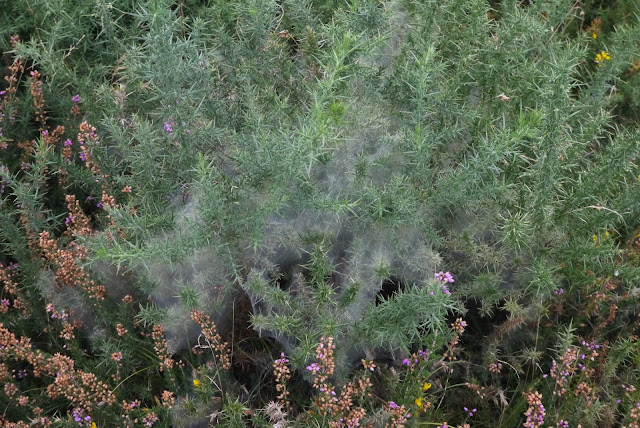
Gorse spider mite, Tetranychus lintearius, Holt Lowes, 26th September 2016


Ivy Colletes, Colletes hederae, Beeston Common, 26th September 2016

Grass of Parnassus, Beeston Common, 26th September 2016

Goldenrod, Beeston Common, 26th September 2016

Staphylinus erythropterus, Holt Lowes, 26th September 2016

Orange Ladybird, Holt Lowes, 26th September 2016

Gorse spider mite, Tetranychus lintearius, Holt Lowes, 26th September 2016


Monday, 19 September 2016
A Flea Beetle and some new species for the patch
Wax Moth, Hunstanton, 15h September 2016


Ladybird, Nephus quadrimaculatus, Holme Marsh, 19th September 2016

Juncus foliosus, Holme Marsh, 19th September 2016

The flea beetle Psylliodes chrysocephala, Hunstanton, 15th September 2016

Tuesday, 13 September 2016
Compass Jellyfish
This Compass Jellyfish Chrysaora hysoscella was stranded on the sand below the cliffs at Hunstanton. The Compass Jellyfish gets its name from the brown, V-shaped markings on the bell which resemble the points of a compass. The long trailing tentacles have a strong venom and produce a painful sting.

I have recently purchased a new book which I have found very interesting to read as well as a useful ID book for the seashore. It is The Essential Guide to Beachcombing and the Strandline by Steve Trewhella and Julie Hatcher.

I have recently purchased a new book which I have found very interesting to read as well as a useful ID book for the seashore. It is The Essential Guide to Beachcombing and the Strandline by Steve Trewhella and Julie Hatcher.
Subscribe to:
Posts (Atom)